The part of the work that never appears in a specification.
We are a small factory, so we are careful about what we claim. What follows is not a programme or a pledge. It is one arrangement that works, and it happens to be the one you are holding when a duvet arrives.
Sewn in the hours spent waiting outside a school.
A mother of a child with a disability rarely gets to hold a regular job. She takes her child to school in the morning and waits there until the day ends, because there is nowhere else to be and no one else to go. Those hours are not free time. They are hours that cannot be sold to anyone.
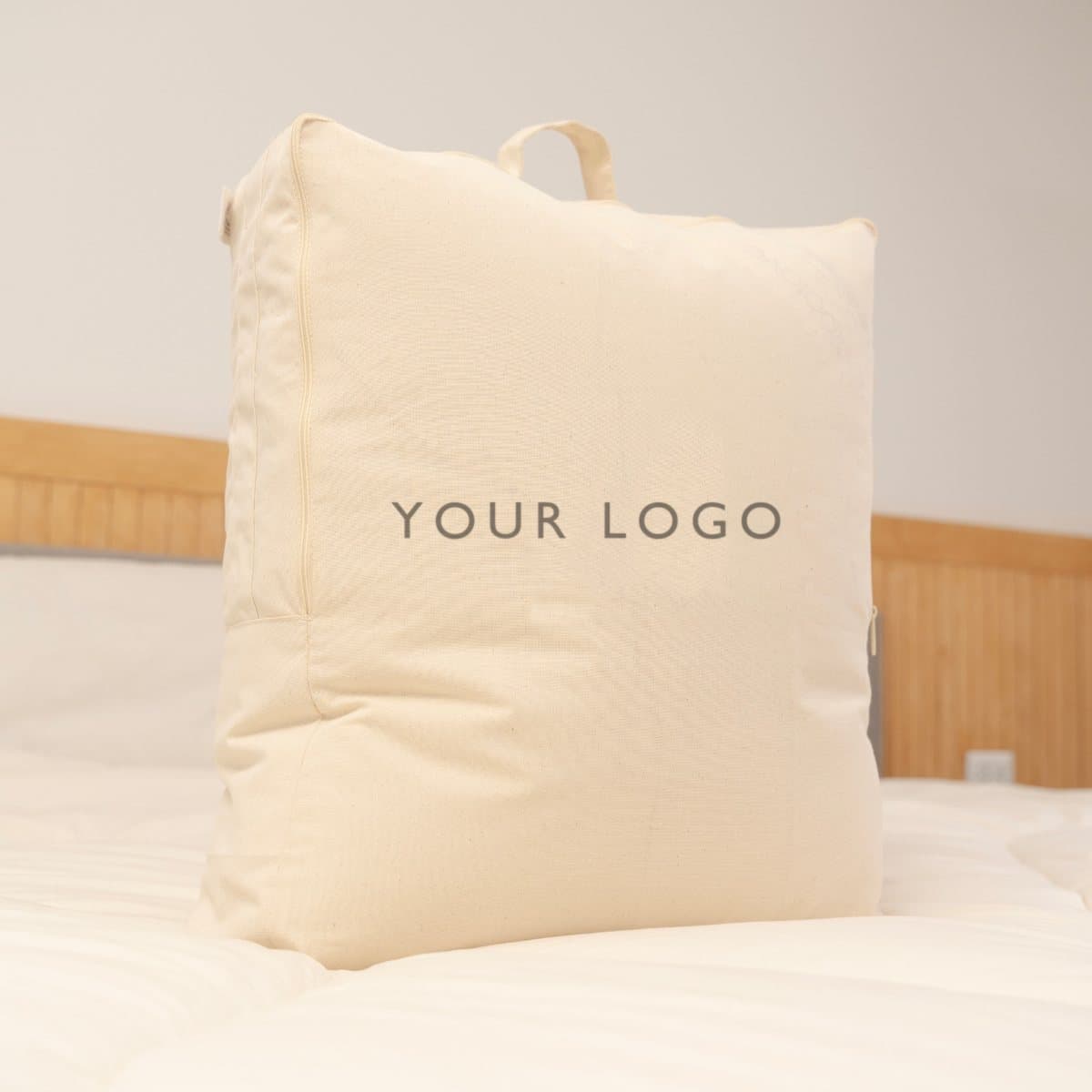
So we buy them. Our cotton bags are sewn by those mothers, in that time, in that place. It is not charity work handed down from a factory: it is a supplier relationship, with an order, a price and a delivery date, for a component we genuinely need.
Drawn by the children, printed on tocuyo cotton.
The designs printed on the bags are made by the children themselves, at the same school. Nobody redraws them to look professional. What is on the bag is what the child made, which is the whole point of putting it there.
For every bag, a dollar goes to the school, and we buy the materials the children use in class. Both are paid by us, not added to your invoice, and neither depends on you choosing to mention it to your own customers.
We would rather do one thing properly than publish a policy.
The same instinct runs through the pillows we fill with dyed fibre left over from yarn lots too small to weave: use what is already there, pay for it properly, and do not dress it up.
If you sell into a market that asks for documentation on any of this, tell us which standard and we will put the evidence together. If you would like to see it in person, the school is in Arequipa and buyers are welcome to visit.